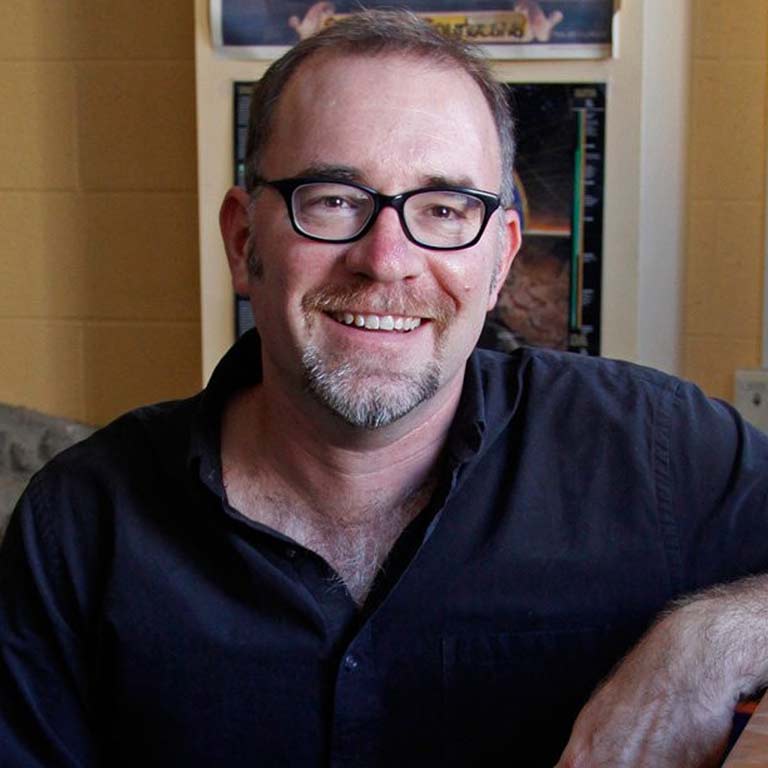
Quoting IU News: "Professor Polly is a paleontologist whose work sits at the intersection of evolutionary biology, geology, and computational science. He studies how life has responded to the shifting conditions of Earth’s history; how species have adapted, flourished, and in some cases vanished, drawing on data from both living organisms and the fossil record to reconstruct the landscapes and evolutionary pathways that gave rise to the present.
His Guggenheim project centers on a pivotal moment in Earth’s climate history, that is, the onset of cyclical ice ages roughly 2.5 million years ago. Polly will investigate whether this climatic shift fundamentally changed how new species come to be."
"Quoting the Guggenheim Foundation website: "(New York, NY--April 14, 2026) -- The Board of Trustees of the John Simon Guggenheim Memorial Foundation announced today their appointment of the 101st class of Guggenheim Fellows, including 223 distinguished individuals working across 55 disciplines. Chosen through a rigorous application and peer review process from a pool of nearly 5,000 applicants, the Class of 2026 Guggenheim Fellows was tapped based on both prior career achievement and exceptional promise. As established in 1925 by founder Senator Simon Guggenheim, each Fellow receives a monetary stipend to pursue independent work at the highest level under “the freest possible conditions.”
“Our new class of Guggenheim Fellows is representative of the world’s best thinkers, innovators, and creators in art, science, and scholarship,” said Edward Hirsch, award-winning poet and President of the Guggenheim Foundation. “As the Foundation enters its second century and looks to the future, I feel confident that this new class of 223 individuals will do bold and inspiring work, undaunted by the challenges ahead. We are honored to support their visionary contributions.”"
David Polly interview with Shelby Rader in Earth on the Rocks
On today's episode of Earth on the Rocks we have Dr. David Polly, a vertebrate paleontologist interested in how past changes (geologically, climatically, environmentally) have affected life and how life may have responded or adapted in turn. Learn about sampling of fossils (both in the field and from museums), what the early internet was like and David's experience at the front lines of it, the giant fossil snake Titanoboa, national monuments and their vital role in paleontology (and how that resulted in David being called to Congress to testify), and learning Finnish through reading The Hobbit.
Listen on any major podcasting platform or directly on our website at this link.
 The College of Arts